Ramokgopa to seek Cabinet approval soon to extend tariff discounts to more industries

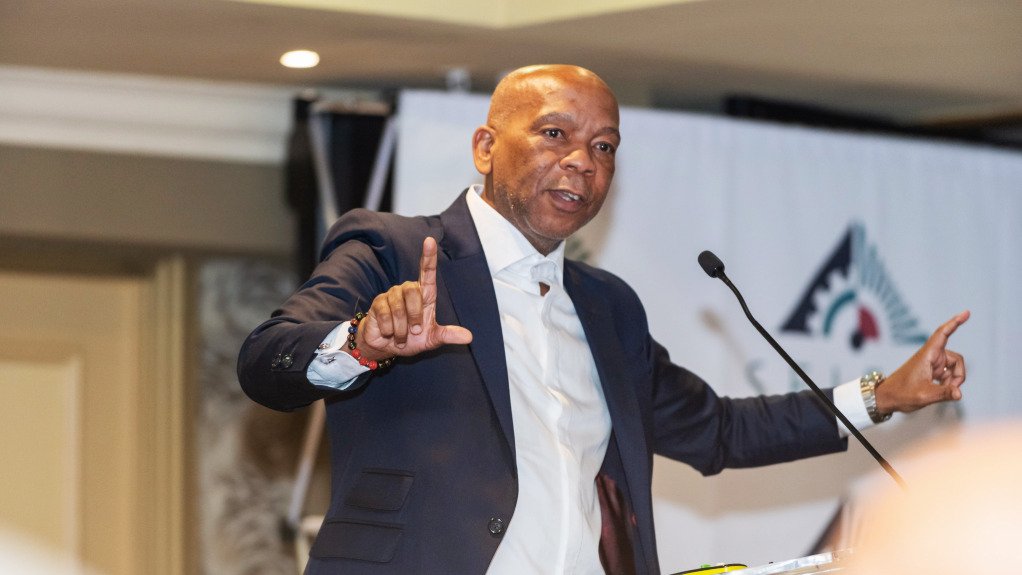



Electricity and Energy Minister Dr Kgosientsho Ramokgopa has indicated that he intends approaching Cabinet in the coming weeks to seek approval to extend concessional electricity tariffs similar to those that have already been approved for two ferrochrome producers to other electricity-intensive industries.
In addition, he told delegates to a Steel and Engineering Industries Federation of Southern Africa (Seifsa) conference on June 11 that lower tariffs could also be made available to less electricity-intensive sectors such as steel; a sector which he described as strategic and where electricity costs had been flagged as one of the reasons for recent production closures.
Speaking against a backdrop of warnings that the metals and engineering sector was at a deindustrialisation inflection point, Ramokgopa indicated that Eskom’s 62c/kWh tariff for Samancor Chrome and Glencore Merafe’s smelters had been implemented in response to the threat of imminent retrenchments, as well as the potential loss of critical beneficiation capacity.
However, he reported that the Department of Trade, Industry and Competition (dtic) was compiling a list of other industries that could become eligible for tariff discounts now that Eskom had some 5 000 MW of surplus capacity.
“We are expanding this to the next set of players, because we don’t want the message to come across that we are protecting the interests of Glencore and Samancor only – we are covering everyone,” he said, indicating that he would take a proposal to Cabinet in the coming fortnight.
On June 8, the dtic published a new Industrial Development Strategy (IDS), which also flagged the prospect of extending discounted electricity tariffs to other energy-intensive sectors.
“Preferential electricity tariffs for the industrial sector (including mining, manufacturing, and energy-intensive industries like smelters) are critical for competitiveness, job creation, and industrial development,” the IDS states, while including the implementation of concessional electricity tariffs for energy-intensive users and beneficiation in an annexure titled ‘Implementation Plan for Immediate Priorities’.
R2.2-TRILLION INDUSTRIALISATION OPPORTUNITY?
Meanwhile, Ramokgopa also used the platform to insist that government was alive to the industrialisation opportunity presented by the investments arising from both the Integrated Resource Plan, which outlines the generation technologies that are expected to be introduced to 2049, as well as the Transmission Development Plan to 2034.
Together, the project pipeline associated with both plans had been quantified to involve collective grid and generation investments of R2.2-trillion.
Seifsa president Mervyn Naidoo said that deliberate policy and procurement choices would be required if South Africa were to leverage these investments in a manner that stimulated industrialisation and job creation.
He argued that it would require a shift in the public procurement model from the prevailing short-term transactional approach to one based on a “strategic” procurement framework, whereby longer-term contracts could be concluded on the back of the designation of selected inputs and components for local content.
Without such a mindset, Naidoo said that South Africa risked repeating the mistakes of previous large-scale procurement projects, such as Transnet’s procurement of 1 064 locomotives, where there had been only limited localisation and where Transnet had been left with hundreds of locomotives standing idle as a result.
Ramokgopa acknowledged that local industry had been a casualty of past policy errors and said that there was scope in the new Public Procurement Act to designate products for local content and production.
While stressing that not every component or product could or should be localised, he nevertheless said it was a priority for government to create the long-term certainty of demand needed by industry to invest and to use industrial and trade policy to support competitive local production.
Article Enquiry
Email Article
Save Article
Feedback
To advertise email advertising@creamermedia.co.za or click here
Research Reports

Projects


Latest Multimedia


Latest News

Showroom
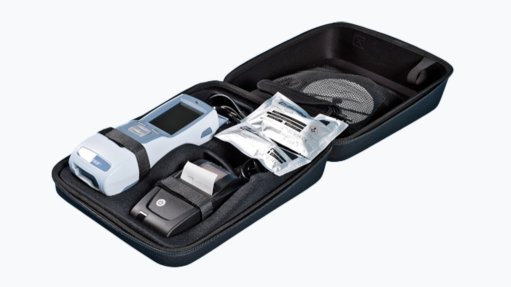
Developed to exceed the latest EN 15964 standards for police breathalysers proving that it will remain accurate and reliable for many years to come.
VISIT SHOWROOM


Press Office
Announcements
What's On
Subscribe to improve your user experience...
Option 1 (equivalent of R125 a month):
Receive a weekly copy of Creamer Media's Engineering News & Mining Weekly magazine
(print copy for those in South Africa and e-magazine for those outside of South Africa)
Receive daily email newsletters
Access to full search results
Access archive of magazine back copies
Access to Projects in Progress
Access to ONE Research Report of your choice in PDF format
Option 2 (equivalent of R375 a month):
All benefits from Option 1
PLUS
Access to Creamer Media's Research Channel Africa for ALL Research Reports, in PDF format, on various industrial and mining sectors
including Electricity; Water; Energy Transition; Hydrogen; Roads, Rail and Ports; Coal; Gold; Platinum; Battery Metals; etc.
Already a subscriber?
Forgotten your password?
Receive weekly copy of Creamer Media's Engineering News & Mining Weekly magazine (print copy for those in South Africa and e-magazine for those outside of South Africa)
➕
Recieve daily email newsletters
➕
Access to full search results
➕
Access archive of magazine back copies
➕
Access to Projects in Progress
➕
Access to ONE Research Report of your choice in PDF format
RESEARCH CHANNEL AFRICA
R4500 (equivalent of R375 a month)
SUBSCRIBEAll benefits from Option 1
➕
Access to Creamer Media's Research Channel Africa for ALL Research Reports on various industrial and mining sectors, in PDF format, including on:
Electricity
➕
Water
➕
Energy Transition
➕
Hydrogen
➕
Roads, Rail and Ports
➕
Coal
➕
Gold
➕
Platinum
➕
Battery Metals
➕
etc.
Receive all benefits from Option 1 or Option 2 delivered to numerous people at your company
➕
Multiple User names and Passwords for simultaneous log-ins
➕
Intranet integration access to all in your organisation